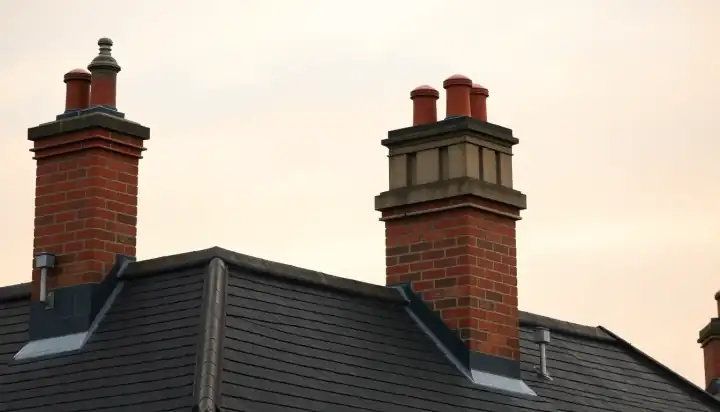
Chimney Repairs
Repointing, rebuilds, flaunching, cowls and lead flashing. We stop leaks at the most common failure point on West London's roofs, since a chimney takes the worst of the weather.
Chimneys are where roofs leak
Tall, exposed and full of joints, the chimney stack takes more weather than almost any part of the roof. So it's no surprise it's behind so many leaks. Eroded pointing, cracked flaunching, failed lead flashing and uncapped flues all let water into the structure below.
We repair the whole stack rather than just the symptom. That means raking out and repointing the brickwork, renewing the flaunching around the pots, re-dressing the lead where the stack meets the roof, and fitting cowls to redundant flues. Where a stack is beyond repair, we can rebuild it or take it down and weather over.
Our guide to chimney repairs and repointing covers why stacks fail before the rest of the roof, and how to tell repointing from a full rebuild.
Chimney work we do
- Repointing eroded and cracked mortar joints
- New flaunching to secure and weather the pots
- Lead flashing and soakers to the stack renewed
- Cowls fitted to redundant or damp-prone flues
- Unsafe or leaning stacks rebuilt
- Chimneys taken down and weathered over
The whole stack, sorted
Inspect the stack
We check the pointing, flaunching, flashing and pots for the true cause. This step usually explains where the leak is really coming from.
Written quote
A clear price for the repointing, flashing or rebuild required. You'll know the cost before any work starts.
Carry out repairs
Brickwork, flaunching and leadwork renewed; cowls fitted as needed. We work carefully at height, since safety matters as much as the finish.
Safe & watertight
We leave the stack sound, the roof dry, and the work guaranteed. The site is tidied before we go.
Chimney repair questions
Do you repair chimneys and repoint brickwork? +
Why is my chimney causing a leak? +
Should I remove or cap an unused chimney? +
Is my chimney safe? +
Written by the Oldfield Roofing team — roofing and building specialists based in Fulham, covering Fulham, Putney, Hammersmith, Chelsea and Wandsworth.
Chimney leaking or looking rough?
Get a free quote for repointing, re-flashing or a full rebuild. Since chimneys are a common source of leaks, it's worth getting checked sooner rather than later.
Get a Free Quote